What’s Going on in the Canadian Economy Right Now?
As we approach the end of 2025, Canada’s economic landscape remains complex, marked by cautious optimism and persistent uncertainty. Recent data and policy decisions signal progress in some areas, while highlighting vulnerabilities in others. Here’s a breakdown of what Canadians need to know.
A Budget Focused on Long-Term Investment
The 2025 Federal Budget, titled Canada Strong, introduces a major shift in the government’s approach to public spending. Rather than focusing solely on short-term stimulus, the government has adopted a Capital Budgeting Framework that separates day-to-day operational costs from long-term capital investments (Department of Finance Canada, 2025). This allows for increased infrastructure spending while aiming to keep operating deficits in check.
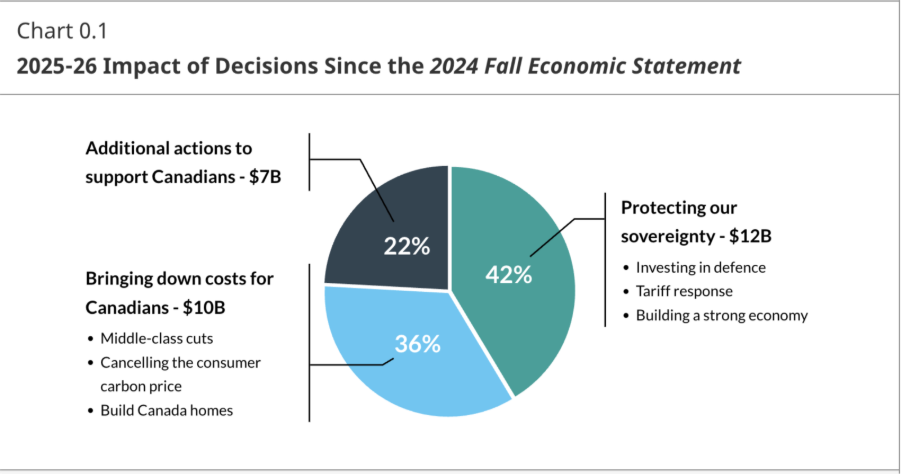
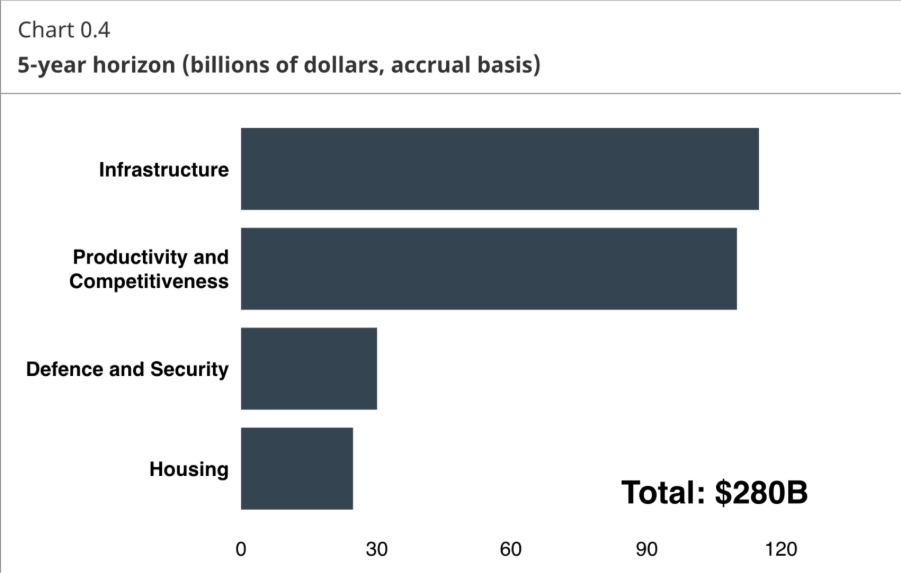
Over the next five years, $280 billion will be allocated toward infrastructure ($115 billion), housing ($25 billion), productivity & competitiveness ($110 billion), and national defence ($30 billion). The government argues that these investments will help “protect our communities, and empower you to get ahead,” (Department of Finance Canada, 2025).
Growing Concerns of a Recession and Persistent Inflation
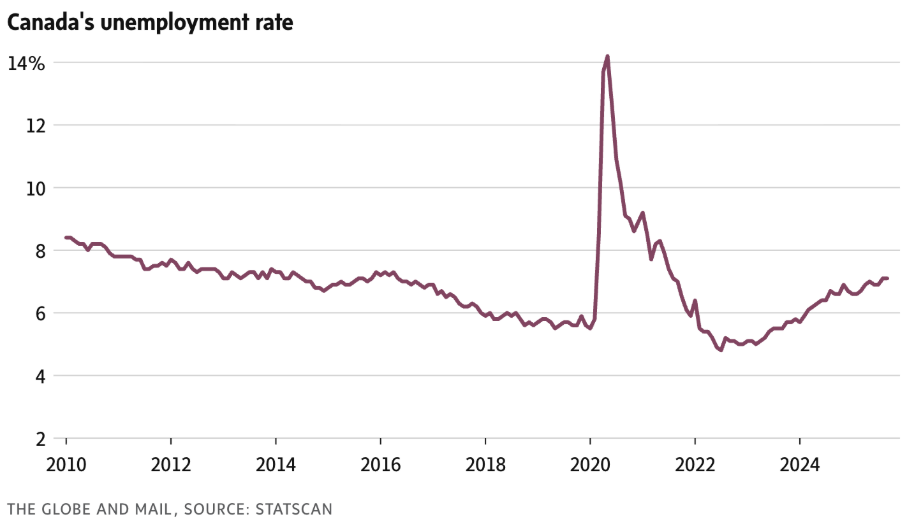
Despite ambitious public investments, Canada’s near-term economic outlook remains soft. Real GDP is now expected to grow just 1.1% in 2025, down from earlier projections of 1.9% (CPA Ontario, 2025). Inflation is projected to average 2.1%, while unemployment is expected to remain elevated at around 7.0%.
Consumer spending has weakened, with retail sales falling 0.7% in September and flat growth projected for October (Suhanic, 2025). A soft housing market and sluggish business investment continue to weigh on economic momentum heading into 2026.
According to the Bank of Canada’s latest Market Participants Survey, there is a one-in-three chance that Canada could enter a recession within the next six months. Nearly 90% of financial professionals surveyed said GDP is running below potential, citing weak consumer demand, trade disruptions, and housing softness as top concerns (Rabinovitch, 2025).
Business investment faces ongoing headwinds, and uncertainty around U.S. trade policy, particularly tariffs, continues to pressure investor confidence. As a result, many forecasters expect economic activity to remain subdued through at least the first half of 2026.
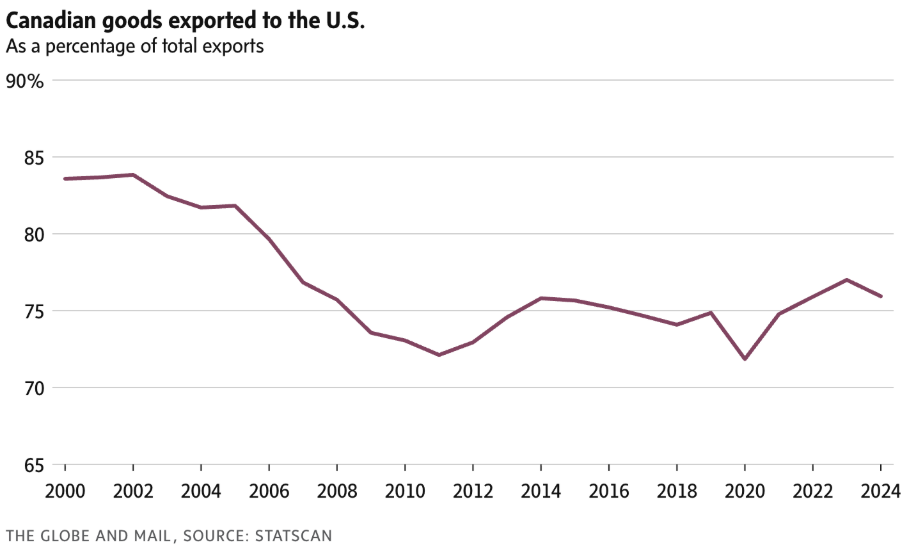
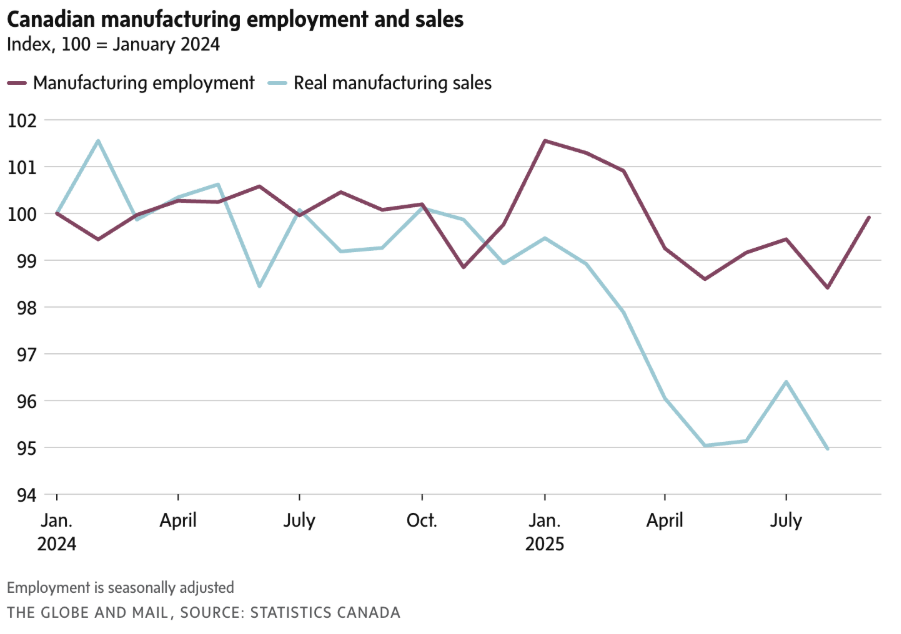
Looking ahead, Canada’s broader economic future remains tightly linked to global trade conditions especially with the United States. Uncertainty around the renewal of the USMCA has raised concerns that expanded tariffs or lost duty-free access could further disrupt Canadian exports, particularly in manufacturing-heavy provinces like Ontario and Quebec (Lundy & Kirby, 2025).
The Central Bank is in “Risk Management” Mode
Former Bank of Canada Governor Stephen Poloz explained that the central bank is currently operating in "risk management mode", a strategy used when the economy faces both the risk of a slowdown and the risk of rising inflation (Gowling, 2025). In this mode, central banks act cautiously to avoid worsening either scenario.
This helps explain why the Bank of Canada reduced its policy interest rate modestly in October to 2.25% and is now expected to pause further adjustments in December. The move reflects a balancing act amid trade tensions, soft job growth, and inflationary pressures (Gowling, 2025).
Canada’s Strategic Bet on AI and Innovation
While the economy slows, the government is looking to technology to drive long-term resilience. The 2025 budget includes $925.6 million over five years to support public AI infrastructure, part of a broader strategy to boost productivity and competitiveness (Department of Finance Canada, 2025).
This includes plans to launch a Sovereign Canadian Cloud and establish an Office of Digital Transformation to lead AI adoption across government services. With other countries like France and Greece already leveraging AI in public administration, Canada’s move is aimed at enhancing efficiency and ensuring it remains globally competitive (Matas, 2025).
What This Means for Your Financial Plan
November’s headlines may feel contradictory: the economy is stagnating, yet the government is investing aggressively in its future. In this environment, planning ahead and understanding how new technologies like AI might influence your financial journey is more important than ever.
Here are three key takeaways for your financial plan:
1. AI is Emerging as a Tool, But Not a Replacement
AI is making its way into the world of financial advice and planning. While it offers promising tools for budgeting, investing, and even retirement forecasting, it's essential to treat AI as a complement, not a substitute, for personalized, human advice. Recent research urges caution, noting that AI tools can sometimes offer overly simplistic or inaccurate guidance without proper oversight (Raman, 2025).
2. Economic Caution Calls for Flexibility
With the Bank of Canada pausing further rate cuts and the economy on a knife’s edge, building resilience into your plan is key. That may mean maintaining more liquidity, adjusting spending, or preparing for slower investment returns in the short term.
3. Investing for the Long Term Still Matters
Even in uncertain times, governments and businesses continue to invest for the future. Whether it’s AI, infrastructure, or clean energy, staying informed about emerging sectors, and ensuring your portfolio is diversified can help align your strategy with Canada’s shifting economic priorities.
AI is powerful, but a trusted advisor keeps your plan grounded in your real goals. Want to know how to find the right advisor for you? Check out our How to Choose a Financial Advisor blog post.
Whether you're a current client or someone looking to take the next step toward financial success, Alpen Investment Advisors is here to guide you every step of the way. Based in North Vancouver, our team, led by Jon Alpen, brings over 18 years of experience in helping clients grow, preserve, and navigate their wealth. With expert guidance, tailored solutions, and a steadfast commitment to your success, we are dedicated to supporting your unique financial journey.
Reach out to us today at jonathan@alpenia.ca to start or continue building your financial future with confidence and clarity.
References
CPA Ontario. (2025, November 5). 2025 federal budget: Highlights and takeaways. https://www.cpaontario.ca/insights/blog/2025-federal-budget-highlights-and-takeaways
Department of Finance Canada. (2025, November 4). Our plan: Building canada strong: Budget 2025. Our plan: Building Canada strong | Budget 2025. https://budget.canada.ca/2025/report-rapport/intro-en.html
Gowling, J. (2025, November 27). Bank of Canada in risk management mode with stagflation on the table. Financial Post. https://financialpost.com/news/economy/bank-of-canada-risk-management-mode-stagflation-poloz
Lundy, M., & Kirby, J. (2025, November 28). Economic outlook 2026: The good, the bad and the downright scary. The Globe and Mail. https://www.theglobeandmail.com/business/rob-magazine/article-economic-outlook-2026-trade-housing-artificial-intelligence/
Matas, S. (2025, November 17). Canada’s 2025 budget moves to keep up with global AI Adoption. CPA Canada. https://www.cpacanada.ca/news/Analysis/budget-ai
Rabinovitch, A. (2025a, November 10). Canada faces recession risk over next 6 months, most financial leaders say - national. Global News. https://globalnews.ca/news/11519749/bank-of-canada-market-participants-survey-november-2025/
Rabinovitch, A. (2025b, November 10). Canada faces recession risk over next 6 months, most financial leaders say - national. Global News. https://globalnews.ca/news/11519749/bank-of-canada-market-participants-survey-november-2025/
Raman, M. (2025, November 11). Canada needs guidelines for AI use in financial advice, report says. The Globe and Mail. https://www.theglobeandmail.com/investing/personal-finance/retirement/article-canada-needs-guidelines-for-ai-use-in-financial-advice-report-says/